RESEARCH
Time to Act is a major research study exploring the difference that Shakespeare’s work and RSC teaching approaches make to the language development and social and emotional development of young people. The project demonstrates the impact of the RSC’s teacher CPD offer and lays the foundation for research to become an embedded part of the Associate Schools Programme.
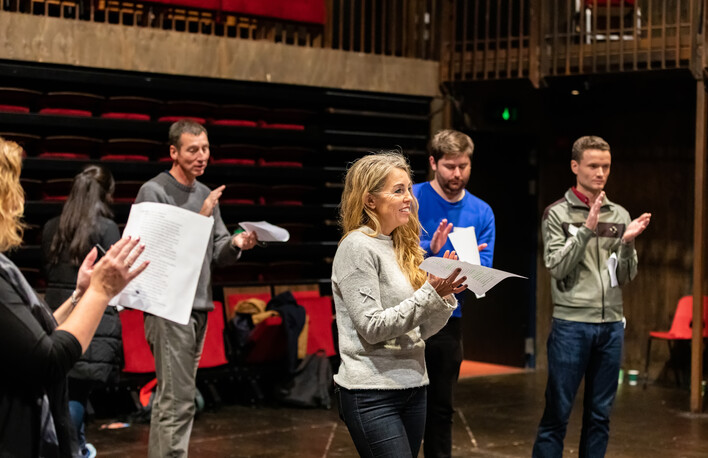
The study consisted of a randomised control trial (RCT) involving schools that had previously never worked with the RSC. Year 5 teachers undertook CPD training in Stratford-upon-Avon and delivered 20 hours of Shakespeare teaching.
Results showed improved language development in pupils’ written outputs, with intervention pupils:
employing richer, broader, and more sophisticated vocabulary
showing a better grasp of complex grammatical structures
being better at writing in character and expressing emotion
demonstrating a broader understanding of abstract terms and descriptions, displaying greater optimism and better inferencing skills.
We also analysed pupils’ belief in themselves as learners and saw an increase in confidence. Using the validated Myself as a Learner Scale, we found that pupils exposed to the approaches were:
17.3% more confident in their ability to work out what to do when stuck
13.8% more confident with language
12.6% more confident when taking a considered approach to tackling work
11.3% more confident in their ability as a learner
9.9% more confident in wider problem solving.
The study also included 14 teacher-led action research projects undertaken by those who have used RSC approaches for several years, across primary, secondary, FE and SEND settings.
Teachers witnessed improvements in pupil writing (breadth, depth, complexity and emotional literacy) alongside enhanced speaking and listening skills. This included children not yet meeting age-related expectations
teachers evidenced increased levels of wellbeing and engagement, including those in SEND settings, those learning English as an additional language and those with multiple Adverse Childhood Experiences
teachers reported that RSC teaching approaches were inclusive, providing a flexible and accessible model for arts learning across diverse educational contexts
teachers reported feeling valued and respected by being given space to explore their practice as researchers
teachers reported how their own professional identity had changed, with research now embedded in their practice.
Why these results matter
DfE research shows a link between enjoyment and frequency of children’s writing and their attainment levels, with data from the National Literacy Trust showing that enjoyment is at its lowest level since 2010 and that 46% of disadvantaged 11-year-olds in England left school in 2022 unable to write at the expected levels.
Time to Act suggests that a combination of Shakespeare’s language and RSC approaches leads to advances in language proficiency and crucially points to an increase in enjoyment and confidence with words, alongside attitudinal shifts in the children’s perceptions of themselves as learners.