FREQUENTLY ASKED QUESTIONS
A quick and clear guide to the Associate Schools Programme.
Frequently Asked Questions - Associate Schools
What is the Associate Schools Programme?
The Associate Schools Programme is our long-term partnership programme with schools and regional theatres across England with teacher professional development at its core. The work is predicated on transforming the way Shakespeare is taught in schools, using RSC rehearsal room pedagogy.
How can we become an Associate School?
Most clusters recruit new schools every other year. To find out if there is a cluster near you or how your school can join the Associate Schools Programme, email associate.schools@rsc.org.uk
How much does it cost?
Each Lead Associate School works with their local theatre partner (where applicable) to create a programme of work. Associate Schools may agree to make a financial contribution towards this, but there is no set charge as the programme will vary in each region. Many elements of the programme are free; for example, attendance at 3 CPD days per year and access to a library of Playmaking Packs, which include an edited Shakespeare play and accompanying notes. There may be costs attached to other elements of the programme but these would be shared across the cluster of Associate Schools.
What level of commitment does it require from a school?
Commitment is required at all levels, from Senior Leadership to all the teachers who will actively take part in the programme.
How many and which teachers from our school can take part?
Each Lead Associate School is required to assign three Lead Teachers to coordinate the programme, but many more can benefit. Evidence demonstrates that the earlier students are exposed to RSC rehearsal room pedagogy, the better their relationship to Shakespeare - and the arts more broadly - is in later years. Therefore, we encourage two teachers from each school to participate in each training, and wherever possible, to share the practice further within schools.
Is the programme open to all schools and FE colleges?
Yes. We have Primary, Secondary, Special schools and FE colleges successfully working in the programme. The pedagogy can be adapted for all learners.
For how long are schools a part of the programme?
Schools join the Associate Schools Programme for a minimum of two years, when there will be a recruitment process where the school can extend their involvement if they choose.
What are the benefits of being an Associate School?
Read about our research, the benefits of a partnership with the RSC and the impact of our pedagogy on the learning outcomes of young people.
Do you have any advice from a school currently in the programme?
Read one Headteacher's advice to any school considering working with us:
Forget everything you thought you knew about Shakespeare and your students. We are a non-selective school and used to be, academically, one of the lowest achieving schools in the country. Introducing new techniques and a more active way of teaching Shakespeare has had a massive impact on literacy levels and aspirations and we are now one of the highest achieving non-selective schools in the country.
Get the whole school involved - especially the parents. Initially we encountered some resistance but we sent information home and held sessions where we invited parents to ask questions. The combination of their own children’s enthusiasm and seeing Shakespeare performed live in their local theatre has completely transformed opinions. It has brought people together and helped develop a renewed sense of pride and joint purpose within the whole community.
Get your staff on board. Some may initially find the idea of Shakespeare – and particularly plays they aren’t familiar with – daunting. But taking that leap of faith is well worth it. Learning techniques the actors use in rehearsals has not only reinvigorated our own teaching practice but we often use the techniques in other areas of learning. We also harness the students’ enthusiasm for Shakespeare in other subjects like History where students have re-enacted the battle of Agincourt and looked at how accurate Shakespeare’s account of history actually was.
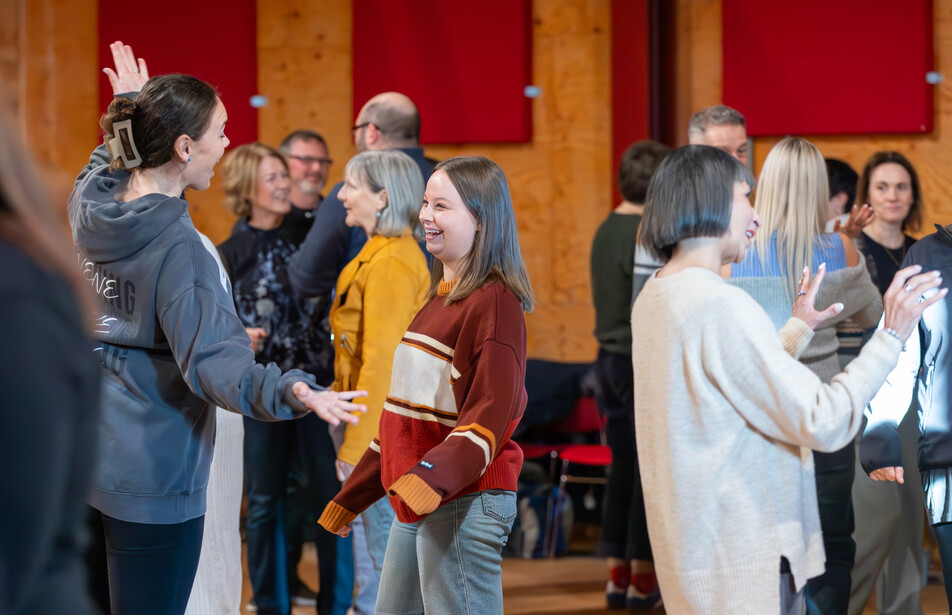
Get students up on their feet. One of the first things we changed was to push all the desks to the side of the classroom and get students to move around the room, playing games to unlock the language and bring out the rhythm and meaning of the words. The students love it, the energy is infectious and the learning just happens.
Be prepared to work hard. This is about going the extra mile but the rewards are plentiful including students who aren’t afraid to take on a challenge; who believe in their own abilities; who think critically and for themselves; have higher aspirations and improved attitudes to learning. Ultimately what that means is that students and staff are happier and the children want to achieve and aspire to more.